AI refers to machine-based systems that can, given a set of human-defined objectives, make predictions, recommendations, or decisions that influence real or virtual environments. AI systems can work unnoticed and at great scale and are often designed with a top-down approach driven by a value system that preferences productivity, economics, and efficiency. The risk of power disparity, widespread exclusion and discrimination is of real concern. Due to the disruptive social, economic, and ethical implications of AI technologies, it is important that we develop ethical frameworks and guidelines for its development and implementation. One such framework has been developed by UNICEF.
UNICEF is the United Nations International Children’s Emergency Fund and is mandated by the United Nations General Assembly to advocate for the protection of children’s rights, to help meet their basic needs and to expand their opportunities to reach their full potential. UNICEF is guided by the Convention on the Rights of the Child and strives to establish children’s rights as enduring ethical principles and international standards of behaviour towards children.
In partnership with the Government of Finland, UNICEF developed draft policy guidance as a complement to efforts to promote human-centric AI, by introducing a child rights lens. The ultimate purpose of the guidance is to aid the protection and empowerment of children in interactions with AI systems and enable access to its benefits in all aspects of life.
In September 2020 UNICEF released a draft report on the Rights of the Child and AI.
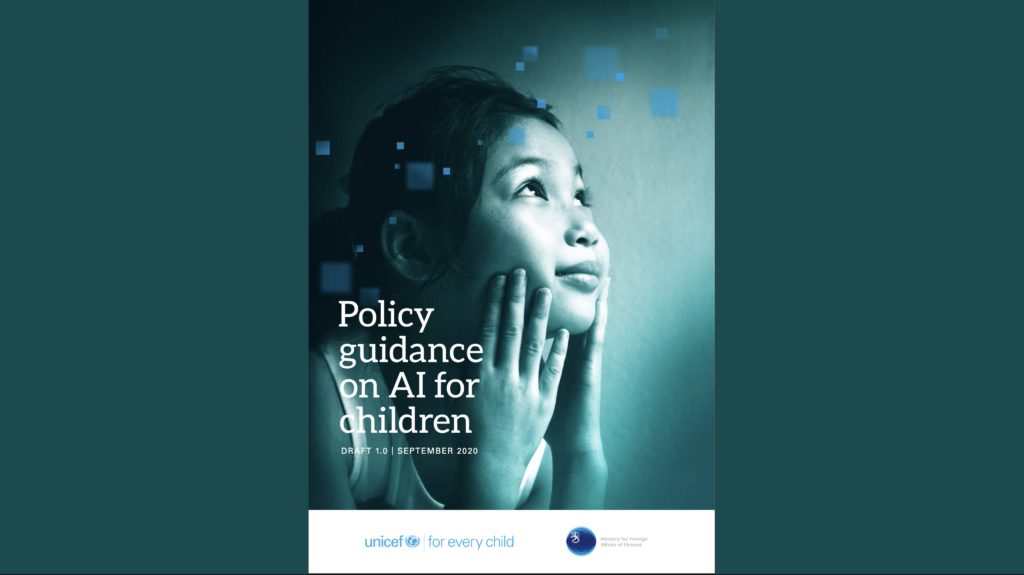
The report can be found here:
https://www.unicef.org/globalinsight/reports/policy-guidance-ai-children
UNICEF does not have legislative power to mandate its Sustainable Development Goals, (SDGs) instead, it works with partners towards the attainment of the sustainable human development goals adopted by the world community and the realization of the vision of peace and social progress enshrined in the Charter of the United Nations. One such partnership has involved the Honda Research Institute (HRI) and the prototype social robot, Haru, I have been fortunate to work on this collaboration in designing creative content and human to robot interaction with Haru. In my design practice, I have always designed for positive social impact. My work with robotics and AI systems is designed to address issues such as inclusion, fairness, privacy, safety, transparency, explainability, accountability and agency.
In the context of a robot there are multiple ethical issues around the AI and the interactions that we are designing. Responsible AI is about ensuring that AI systems are ethical, legal, beneficial and robust; that these properties are verifiable and that organisations that deploy or use these systems are held accountable. It is also critical to understand that AI systems are not magic and should not be presented as such. Transparency around how AI works is crucial.
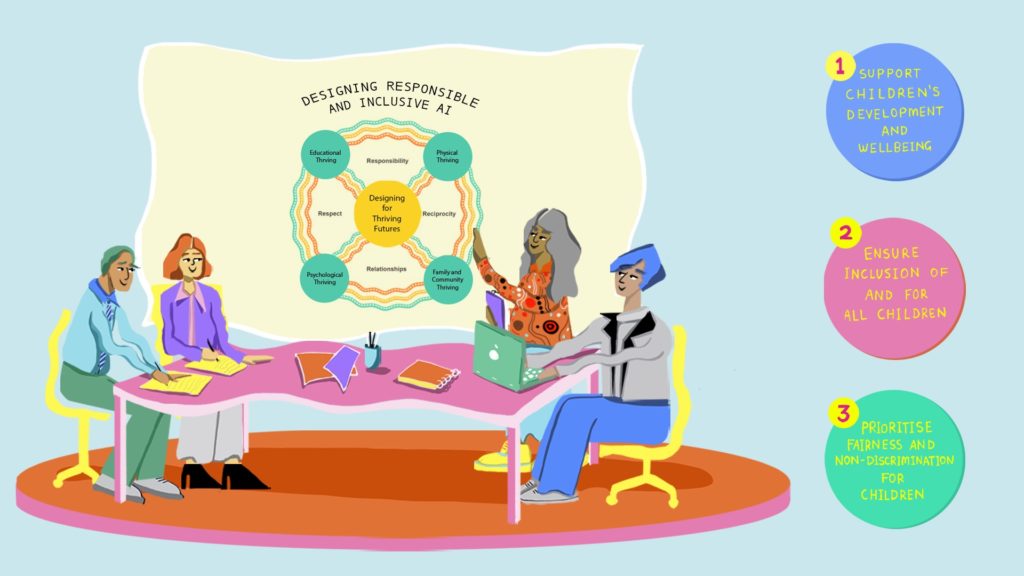
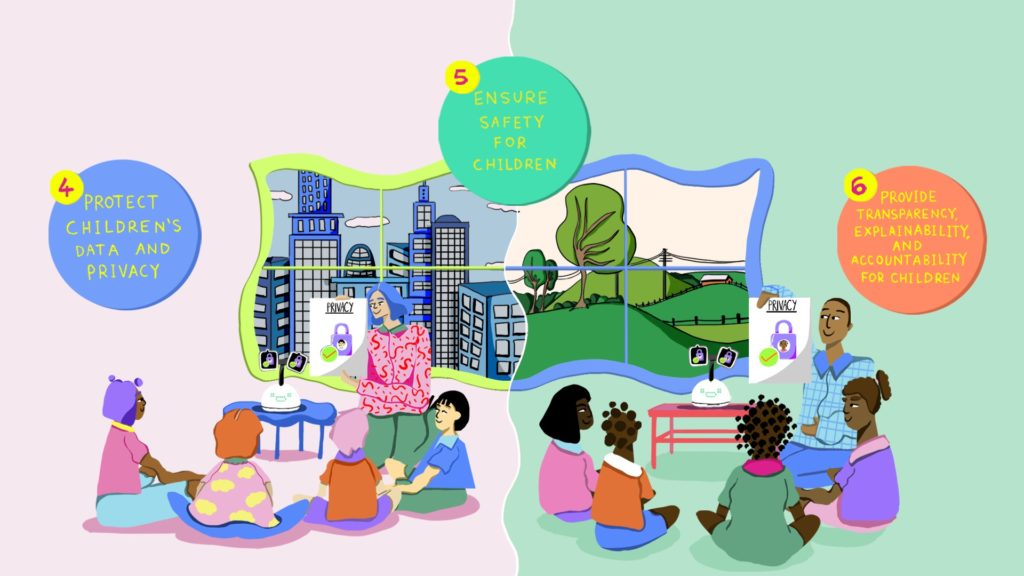
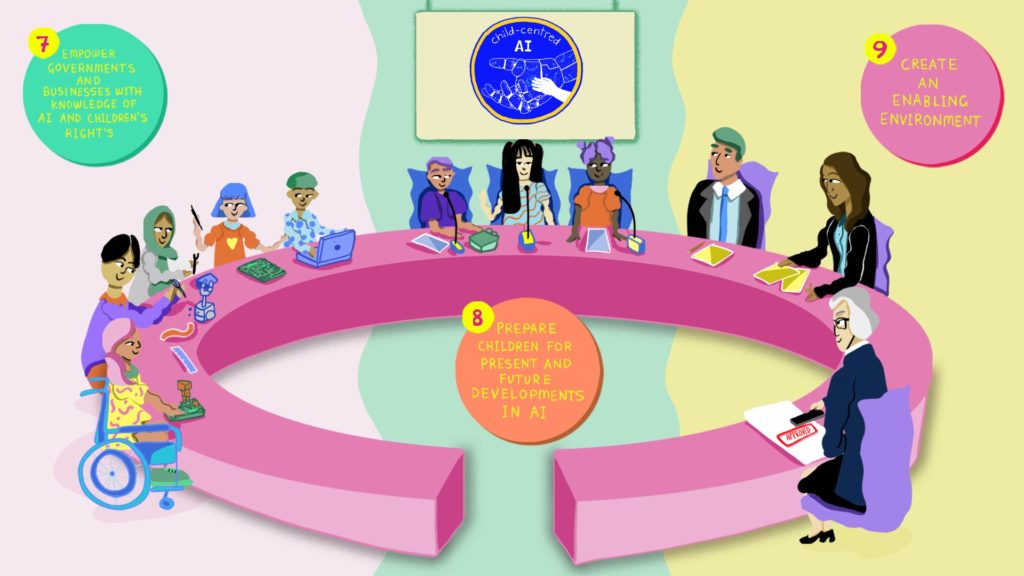
The UNICEF report highlighted nine sustainable development goals (SDGs) for people working with AI aimed at children. In many ways the UNICEF SDGs provide an ethical framework that I feel should be applied to all AI projects, not just those aimed at children. The UNICEF report is essential reading for anyone working with child-centred AI. I’ve taken the nine SDGs and visualised them in their short form below.