
Designing interactive creative content for the prototype social robot, Haru, to support inclusive practices in school age populations
The Talking Room builds on a longitudinal collaboration between UTS and HRI-JP which applies design, animation and storytelling principles to social robotics. The project is an interactive, creative content program facilitated through the prototype social robot, Haru, and aimed at high school students around the world.
As social robots are being designed to be active social actors within human society, there is a need to understand how to design them in a way that fosters diversity and inclusion. The Talking Room aims to support inclusive practices and an acceptance of diversity in high school aged students through an exchange of ideas, discussion and shared experience with the social robot Haru, and their peers in other countries. The project is designed to UNICEF SDG’s as outlined in their Policy Guidance on AI for Children (2020) and Universal Design Principles in order to create an enabling environment that addresses issues of fairness, non-discrimination, transparency, explainability and accountability for children.
The Talking Room acknowledges that an acceptance of diversity is created out of ‘sharedness’ not ‘sameness’ and that it is interaction and actual experiences with members of other social or racial groups that encourage positive effects and minimise bias and undesirable impacts. The project is designed to encourage students to form a ‘sharing’ community comprised of students from diverse backgrounds to support a greater understanding and acceptance of the variety of human experience and identities.
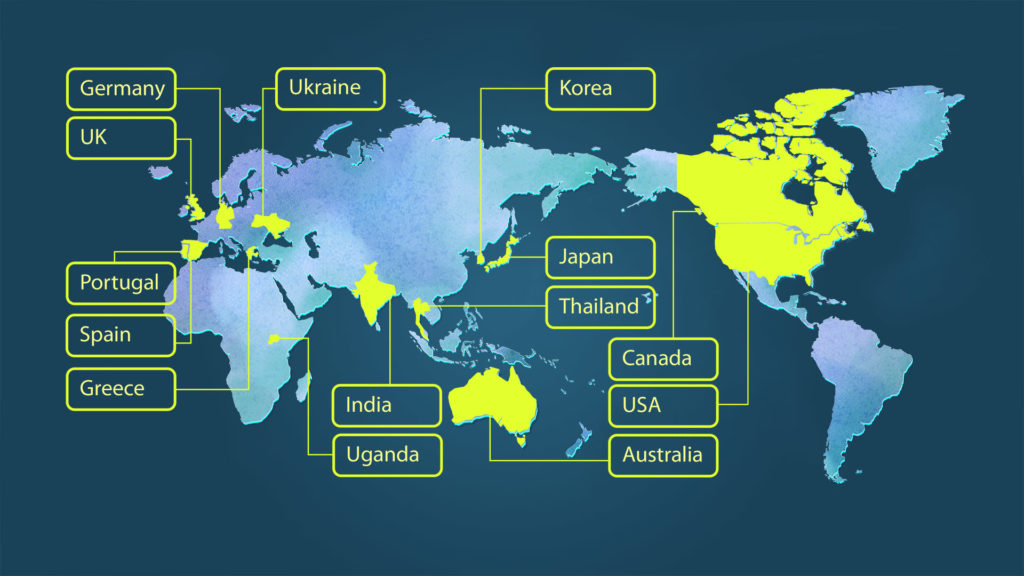
A pilot study of the Talking Room will take place between high school students located in Australia, UK, Portugal, Spain, Greece, Thailand, Uganda, USA, Germany, Japan, Ukraine and India from late April – August 2022. The findings from The Talking Room project and user testing will contribute to the development of social robotics/AI technologies that consider the technology’s impact on children and create an enabling environment for child-centred AI that supports children’s prosocial development and well-being.
Ref: Office of Global Insight and Policy, 2020.Policy guidance on AI for children draft 1.0 | September 2020 , United Nations Children’s Fund (UNICEF)